Even the most fulfilling personal life gets better in the company of people who know you—who notice when you're not at lunch, who save a seat at the lecture, who ask what you've been working on lately. That kind of daily, familiar human presence isn't a luxury. Research increasingly frames it as one of the most significant contributors to how well people age.
According to the CDC, social isolation and loneliness are associated with a substantially higher risk of dementia, heart disease, stroke, and depression in older adults. By contrast, older adults who maintain strong social ties consistently show better physical health, sharper cognitive function, and greater overall life satisfaction.
The question worth asking goes beyond just avoiding isolation—it's how to build a daily life where belonging is the default. At Beacon Hill in Lombard, Illinois, the answer is built into the community itself.
Key Takeaways:
- Strong social ties are among the most documented contributors to cognitive health, physical well-being, and longevity in older adults.
- Community living creates the conditions for consistent social interaction to occur as a natural byproduct of daily life.
- At Beacon Hill, more than 30 resident-led clubs, multiple gathering spaces, and a culture grounded in grace and gratitude make belonging feel immediate and lasting.
Why Connection Requires the Right Conditions
Wanting connection and actually having it regularly are two different things—and the gap between them often comes down to structure and proximity.
The National Institute on Aging identifies retirement, loss of a spouse, and reduced mobility as factors that can quietly erode social engagement over time—not because someone stops caring about relationships, but because the natural occasions for them become fewer. Work provided daily opportunities for interaction. A neighborhood with young families created an effortless social fabric. Those structures fade, and unless something replaces them, the calendar fills with solitary tasks instead of shared ones.
Community living is one of the most direct solutions to that structural gap. When you live among people who share your stage of life, your spaces, and show up to the same programs, meals, and activities, engagement stops being something you arrange and starts being something that simply unfolds around you.
What Daily Life at Beacon Hill Actually Looks Like
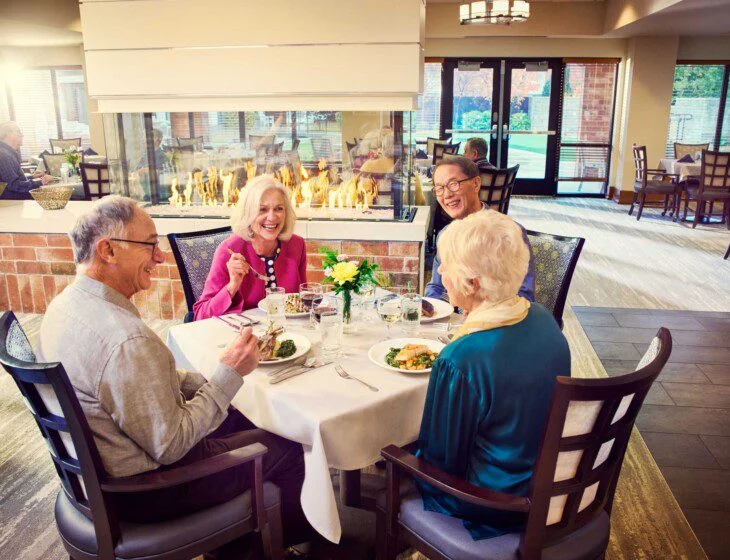
At Beacon Hill in Lombard, social engagement is the texture of a regular day. Residents gather over meals in three distinct dining venues: The Lincoln Dining Room, O'Neill's Café, and The Courtyard, with Finley Terrace available for outdoor gatherings. These aren't just places to eat; they're the kind of recurring, familiar settings where friendships take root and deepen over the years.
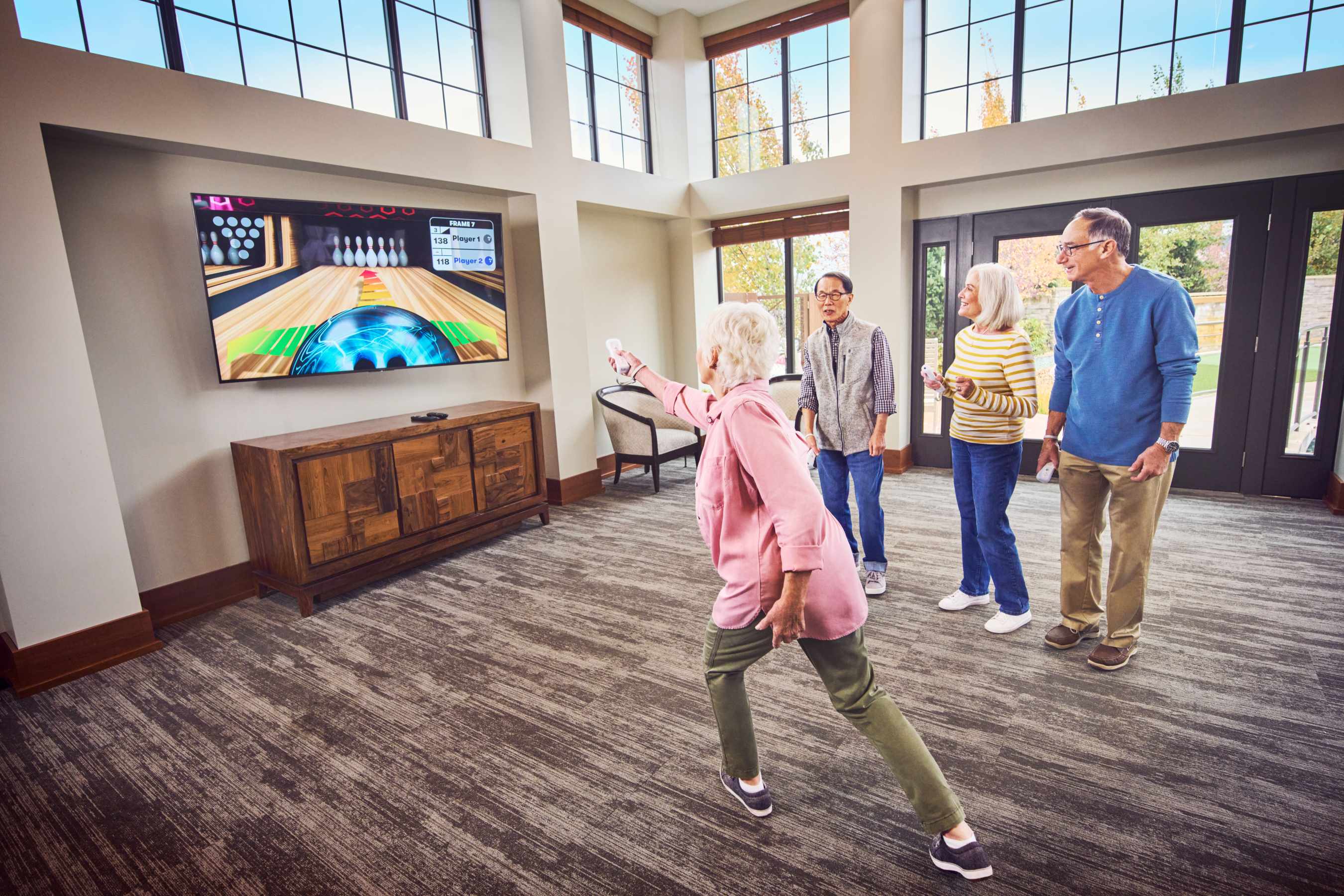
More than 30 resident-led clubs and activities mean there's almost always something happening that aligns with your actual interests—whether that's a lecture series, a creative workshop, a billiards game, or a library discussion group. An auditorium and dedicated event spaces host lectures, performances, and enrichment events that give residents common experiences to share and talk about.
Research published in peer-reviewed literature confirms that even regular, low-intensity social contact—shared meals, familiar faces, brief exchanges—carries measurable cognitive and emotional benefits for older adults. The regularity of that contact matters more than its intensity, and Beacon Hill makes that regularity easy to sustain.
The Difference a Culture Makes
Beacon Hill carries a cultural signature that deserves recognition: grace, gratitude, and groundedness. Residents here have described a community where people genuinely look out for one another—where the warmth isn't performative, but practiced. Long-tenured couples and widowed residents who've made this community their home over many years have helped cultivate a tone of mutual care and steady engagement that new residents step into from day one.
A 2025 Forbes analysis of senior living and loneliness found that the quality of relationships within a community—not just their frequency—drives well-being outcomes. Beacon Hill is the kind of place where that quality is self-reinforcing: residents who arrived looking for community found it, stayed, and shaped the very atmosphere that draws the next person in.
Wellness, Creativity, and the Social Life That Surrounds Both
Social life at Beacon Hill doesn't only happen in the lounge or at the dinner table. It happens in the fitness center during a group class, along the walking paths that wind past the community's scenic lake and streams, and in the art studio or woodworking shop where shared projects become shared stories.
U.S. News & World Report survey data shows that senior living community residents are significantly more likely to report daily social activity and a sense of belonging than older adults living alone at home. At Beacon Hill, the heated indoor pool, the wellness class calendar, and the creative spaces all serve double duty—keeping residents physically active while naturally drawing them into the company of neighbors.
The result is a life that feels full in the way that matters: meaningfully occupied, and meaningfully shared.
Find Your People at Beacon Hill
Explore life at Beacon Hill in Lombard and see what it looks like to live somewhere your presence is noticed, your interests are supported, and your social life doesn't require scheduling. Contact us to schedule a tour or speak to our team.